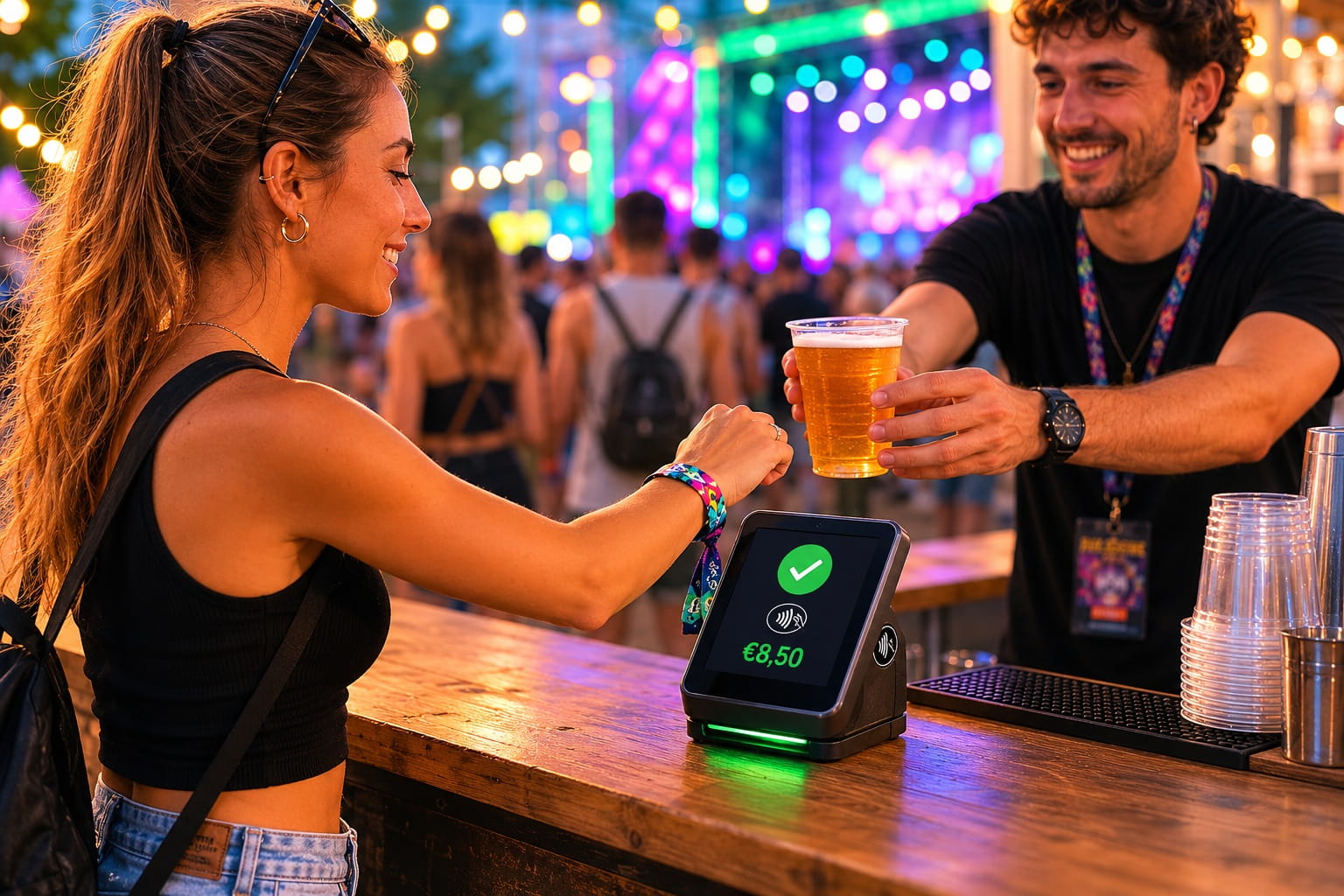

Event check-in is the process by which an attendee confirms their arrival at the venue and gains access to it. Traditionally this was done with paper lists, manually searching for the attendee’s name and marking it with a pen. Today, digital check-in allows hundreds of people per hour to be registered with a simple QR code scan or NFC card tap.
For the organizer, check-in is not just an entry gate: it is the first point of contact with the attendee and the moment where everything that came before (registration, ticket sales, accreditations) is validated. A slow or disorganized check-in creates queues, complaints and a negative first impression that affects the entire event experience.
According to industry data, 85% of event attendees consider entrance queues to be one of the main pain points of the experience. A well-implemented digital check-in system can reduce registration time from 3 to 5 minutes per person to under 10 seconds.
The digital check-in process has three clearly defined phases.
The attendee registers online through a page set up by the organizer, entering their details (name, email, ticket type) and receiving their digital accreditation by email. This accreditation includes a unique QR code that serves as their event entry pass.
With Exyt, this process is managed through the Exyt-Acreditados app, which allows the organizer to create the registration page, collect attendee data and send accreditations automatically by email, all from a single dashboard.
On the day of the event, the attendee presents their QR code (on their phone or printed) at the access point. A staff member with a PDA or QR reader scans the code and the system validates in real time whether it is correct, whether it has already been used and whether it corresponds to the right access zone.
If the QR is valid, access is granted in under a second. If it is duplicated or fraudulent, the system detects and blocks it automatically. There is no need to search through lists or check documentation: the system does all the work.
While check-in is taking place, the organizer can see from the management dashboard how many people have entered, at what time and how many are still to arrive. If there is a problem at any access point, it is detected immediately without the need for radio communication between staff.
An event check-in app allows the organizer to manage attendee registration and access directly from a smartphone or tablet, without the need for specialized hardware or desktop computers at the entrance.
The main features of a professional check-in app are the following.
QR code scanning with the phone camera. The operator opens the app, points the camera at the attendee’s QR and the system validates the entry in real time. This is the most flexible solution for small to medium events where there is no budget for dedicated readers.
Manual attendee search. If an attendee cannot present their QR (dead battery, email issue), the operator can search for their name directly in the app and register the check-in manually.
On-site attendee registration. For events with door registration, the app allows new attendees to be added on the spot, their accreditation generated and their entry registered without accessing the web dashboard.
Offline mode. In venues with poor mobile coverage, the app can operate without an internet connection and sync data when signal is restored, ensuring check-in is never interrupted.
Real-time control dashboard. The organizer can see from any device how many people have checked in, the pace of arrivals and any issues at access points.
Depending on the size and type of event, the most suitable solution varies.
For events of up to 500 people, a check-in app installed on smartphones or tablets is sufficient. It is more cost-effective, requires no additional hardware and gives the organizer flexibility over the number of access points.
For events with more than 500 attendees or with several simultaneous access points, dedicated readers (PDAs with integrated QR scanner) offer faster scanning speeds, greater durability in outdoor conditions and better performance with high attendee volumes. A dedicated reader can process between 600 and 1,000 people per hour under optimal conditions, compared to 300 to 400 for a smartphone with an app.
At large events, the most common approach is to combine both options: dedicated readers at the main high-traffic entrances and smartphones with the app at secondary access points or auxiliary registration desks.
Paper check-in is still common at small or poorly planned events, but it has clear limitations that digital check-in solves.
Speed. Finding a name on a list takes between 30 seconds and 3 minutes depending on the list size and alphabetical organization. Scanning a QR takes under 1 second.
Fraud detection. With a paper list it is impossible to know if someone has duplicated their ticket. With a digital system, the second scan of an already used QR is detected and blocked automatically.
Real-time data. With paper, the organizer does not know how many people have entered until the event ends and they count the marks. With a digital system, the count is continuous and visible from any device.
Scalability. A paper list works reasonably well with 100 people. With 1,000 people it becomes chaotic. A digital system scales without issues regardless of the number of attendees.
Zone management. With paper it is practically impossible to manage differentiated access by zone (VIP, press, general) without making mistakes. The digital system handles this automatically with every scan.
With Exyt, the check-in process works as follows.
First, the organizer creates the event on the platform and sets up the online registration page where attendees enter their details. Second, attendees register and automatically receive their accreditation with a QR code by email. Third, on the day of the event, access staff use the Exyt-Acreditados app or QR readers to validate entries in real time. Fourth, the organizer monitors check-in from the control dashboard and has full visibility of access at all times.
The entire process (registration, accreditation and access control) is managed from a single platform, with no need for external tools or manual data exports.
What is the difference between check-in and accreditation at an event? Check-in is the process of confirming an attendee’s arrival at the event. Accreditation is the document or medium (QR, card, wristband) that identifies the attendee and grants them access. In practice, check-in is completed by presenting the accreditation at the entry point.
Can I do check-in without an internet connection? Yes, if the system is designed to work in offline mode. The best event check-in systems store the attendee list on the device and sync data when the connection is restored, ensuring access is never interrupted even if there are coverage issues.
How far in advance should I open online registration? It depends on the type of event and the number of expected attendees. For events with more than 500 people, it is recommended to open registration at least 2 weeks before the event so that attendees have time to register and the organizer can handle any issues before the day.
Is QR code check-in secure? Yes. Each QR is unique and contains encrypted information linked to the attendee. The system detects duplicates in real time, making it practically impossible to access the event with a copied or forged ticket.
Can I use a free app for event check-in? There are free apps for scanning QR codes, but they do not offer the features needed for a professional event: duplicate detection, zone management, real-time control dashboard or offline mode. For events with more than 200 to 300 attendees, a professional system is essential to avoid incidents.
Does the check-in system work for multi-day events? Yes. The system can be configured so that each accreditation is valid on specific days or for the entire event, and to register check-in independently each day.
Managing event check-in does not have to be complicated. With the Exyt app and accreditation system, attendee registration, accreditation sending and access control are all managed from a single platform, with no queues, no paper and no errors.
→ Discover the Exyt accreditation and check-in system → Contact us for your next event