
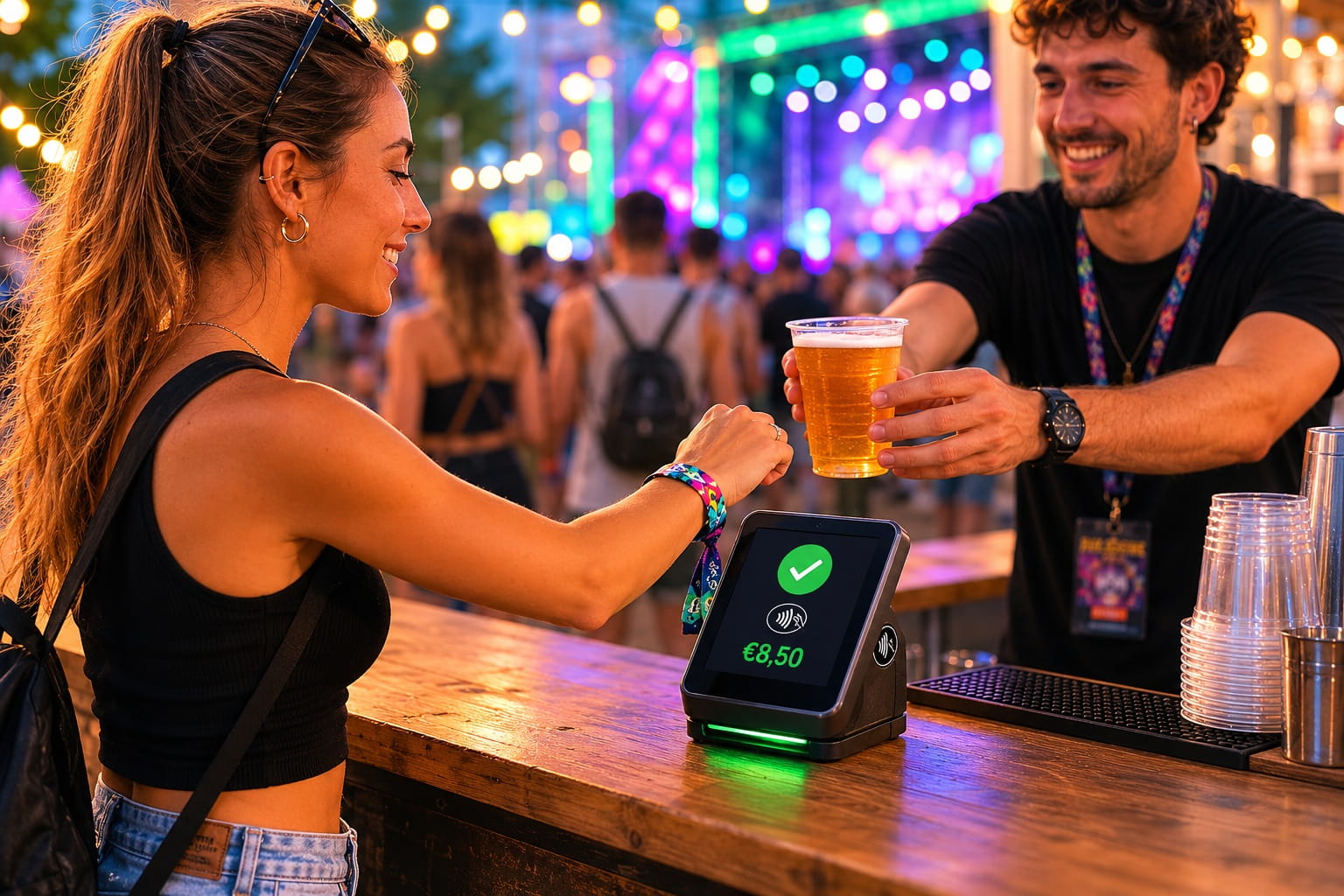
The cashless return is the process by which an assistant recovers the balance that he/she has charged on his/her wristband or card and has not managed to spend during the event.
In a cashless payment system, the attendant charges an amount of money before or during the event and consumes this balance in bars, food trucks and other points of sale. It is common for a remnant to remain at the end, either because the last recharge was higher than actual consumption or because the assistant charged balance anticipating an expense that he did not finally make.
This money still belongs to the assistant. The cashless return is the mechanism that allows you to recover it.
Although each organizer sets its own conditions, the standard process follows these steps.
1. Application period
The organizer enables a form, usually on the event website, where the attendee can request a refund. This form is usually opened during the event or immediately after its completion.
2. The wizard identifies its wristband or card
To link the request to the correct balance, the assistant enters the identifier of his cashless wristband, the card code or the data with which he registered. This identifier is usually printed on the medium itself.
3. The bank details
The assistant provides the IBAN or payment method where you want to receive the amount. Most systems return the money by bank transfer.
4. Organizer processes requests
Once the deadline has expired, the organizer or its technology provider verifies the outstanding balances and executes the returns in a grouped manner.
5. The wizard receives the amount
The payment period varies according to the organiser and the bank, and is usually between 15 and 45 days from the end of the application period.
There is no single deadline applicable to all events. Each organizer defines it in its particular conditions, which must be published before the sale of tickets or the first recharge.
The most frequent deadlines in the Spanish market are:
After this period, many organizers consider the balance as unclaimed. This point is particularly relevant and should be clearly detailed, as it has been the subject of complaints by consumer associations.
The balance loaded on a cashless wristband is money from the attendee who has been handed over to the organizer or his payment service provider in exchange for a prepaid instrument.
In Spain, the conditions applicable to this type of instrument are framed within the regulations of payment services, set out in the Royal Decree-Law 19/2018, of payment services and other urgent measures in financial matters, which transposes the European directive PSD2.
Additionally, Royal Legislative Decree 1/2007, which approves the revised text of the General Law for the Defence of Consumers and Users, establishes in its article 82 that those clauses not negotiated individually that cause a significant imbalance in the rights and obligations of the parties will be considered abusive.
In practice, this implies two things for the organizer:
Conditions must be transparent and accessible before recharging. The assistant is entitled to know the return period, the refund method and any commission applicable before charging balance.
Management fees must be justified. Some organizers apply a fixed fee to manage the refund. This practice is common in the sector, but it must be clearly communicated and proportional to the real cost of the service. disproportionate or uninformed commissions may be considered abusive.
Several consumer organizations, including OCU and FACUA, have issued statements on the conditions of return at festivals, noting the lack of transparency as the main reason for complaint in this area.
It is common for the return process to be associated with a management commission. The usual amounts are between 0.50 and 1.50 euros per transaction, although some events do not apply any commission.
The usual justification is the cost of bank transfer and administrative management of the process. However, two nuances should be considered:
If the outstanding amount of return is less than the commission, the return will no longer make economic sense to the assistant. Some systems set a minimum amount below which the refund is not processed, and this threshold must be communicated in advance.
When the commission represents a high percentage of the balance to be returned, the probability of claims increases significantly. A moderate commission policy reduces conflict and improves the perception of the event.
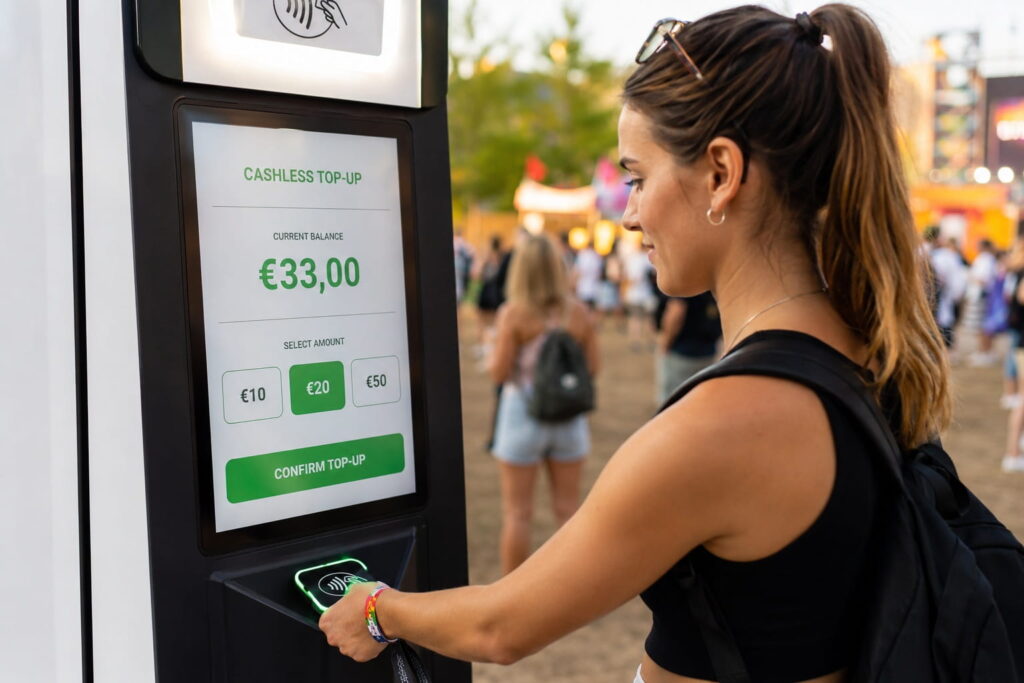
The management of returns is one of the processes that has the greatest impact on the final perception of the event, because it happens when the attendee has already left and there is no margin to compensate for a bad experience.
Communicate conditions before event
The term, the method of return, the applicable commission and the minimum amount must be published before the assistant performs the first recharge. Including it only in the general conditions is not enough if it is not easily accessible.
Facilitate the application process
A complex or difficult to find return form reduces the number of requests, but increases claims and reputational misdemeanours. Access to the form should be visible from the event website and communicated by email to all registered attendees.
Encourage consumer-adjusted recharging
A significant part of the unconsumed balance is generated because the assistant loads high quantities to avoid queues at recharging points. Enabling sufficient recharging points and allowing reduced amount recharges decreases the total volume of returns to manage.
Meeting the announced deadlines
Failure to comply with the subscription period is the main reason for claiming cashless returns. It is preferable to announce a tight deadline and comply with it than to announce a tight one and not be able to attend to it.
Keep traceability of operations
Every recharge, consumption and return must be registered. This traceability is necessary both for resolving individual claims and for any subsequent administrative requirement.

How long does it take to get the money from a cashless return?
Depends on the Organizer. The usual period is between 15 and 45 days from the end of the application period. This term must be published under the event conditions before the first recharge.
Can I request a refund if I have lost my bracelet?
In most systems yes, as long as the assistant can be identified using the registration data or the recharge receipt. It is advisable to keep the confirmation email of the surcharges made.
Is it legal for me to be charged a commission to return my money?
It is a common practice in the sector and is not prohibited, provided that the commission is informed in advance, is proportional to the real cost of the service and is not disproportionate to the amount returned. If not previously reported, it may be reclaimable.
What happens if I do not request a refund within the deadline?
After the established deadline, most organizers consider the balance as unclaimed. The specific conditions vary and should be reviewed, as this point has been questioned by consumer organizations.
Can the balance be transferred to another event?
Some organizers holding recurring events allow you to keep the balance associated with the attendee for future editions. It is not the majority practice and must be expressly contemplated in the conditions.
How can the organizer reduce the volume of returns?
Enabling sufficient recharging points so that the assistant does not need to load high amounts in a preventive manner, allowing low-import recharges and clearly communicating the balance available during the event.
If you are considering implementing a non-cash payment system in your event, the returns policy is one of the aspects that should be defined from the beginning, together with the sizing of the recharging points and the operation of the terminals.
How a cashless payment system works for events


