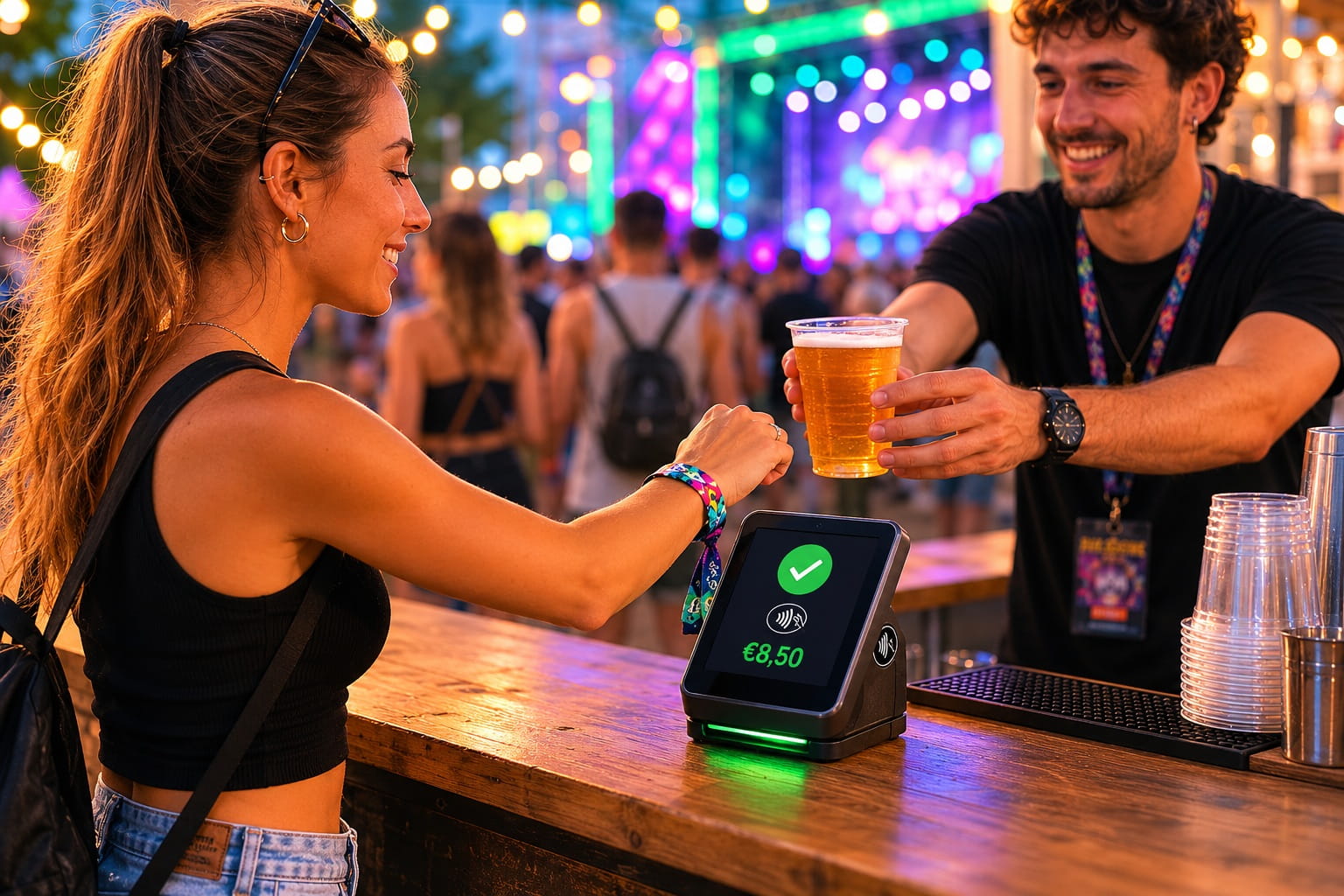

An accreditation is the credential that identifies each person at an event and shows which areas they can access. It can be a badge with their name and a QR code, a wristband or a QR code on their phone, and it’s scanned at the door to check that it’s valid and that their profile is allowed into that area.
Conferences, trade shows, festivals and corporate events use them to tell attendees apart from speakers, press, exhibitors or staff, and to make sure everyone only goes where they’re supposed to.
It depends on the event, but it usually has:
Each profile has its own permissions. When the accreditation is scanned, the PDA shows whether that person can enter the speakers’ room, the backstage area or the VIP zone. That keeps out anyone who shouldn’t be there, without staff having to recognize people on sight.
At a conference or trade show, having names and companies visible makes networking easier. For staff, knowing who’s a speaker or press saves a lot of questions.
If the accreditation is scanned at the door, there’s a record of who came in, when and through which entrance. That data helps manage the occupancy of each room during the event and plan the next edition.
The classic card, with a badge holder and a lanyard. It’s the most common option at conferences, trade shows and corporate events. It can arrive already printed or be printed at the check-in desk on arrival. We explain how they’re put together, from design to printing, in how to create accreditations for events.
Widely used at festivals, concerts and sports events, especially multi-day ones. If it has an NFC chip, it’s read by holding it near the reader.
A QR code the attendee receives by email and shows on their phone. There’s nothing to print in advance and no line to pick it up, and it can include information for their profile: the room, the schedule or which entrance to use.
A card or wristband with a chip that’s read by proximity. It’s the fastest at the door, and the same wristband can be used to pay inside the venue.

An accreditation isn’t much use if nobody scans it. Combined with access control, each scan checks on the spot that it’s valid, that it hasn’t been used already and that the profile can enter that area, and it keeps a record of who came in.
If you need the full accreditation service (attendee registration, sending the accreditations, printing at the desk and controlling who gets into each area), we explain it on our accreditation and attendee registration page. For events that only need accreditations, from a graduation to a festival, we also do it at acreditados.es.
A ticket gets you into the event; an accreditation also identifies the person and their profile, and shows which areas they can access. That’s why it’s used for speakers, press, exhibitors or staff.
Yes. They can be printed at the check-in desk as each attendee arrives, after scanning their QR code or looking up their name on the list.
It depends on the event. At a conference, many people want their name visible for networking; for fast entry, a QR code on the phone is enough. You can combine them: the QR code arrives beforehand and the badge is printed on arrival.
At Exyt we handle attendee accreditation and registration and access control with Exyt Events+. If you want to know which type of accreditation fits your event, tell us about your event.