
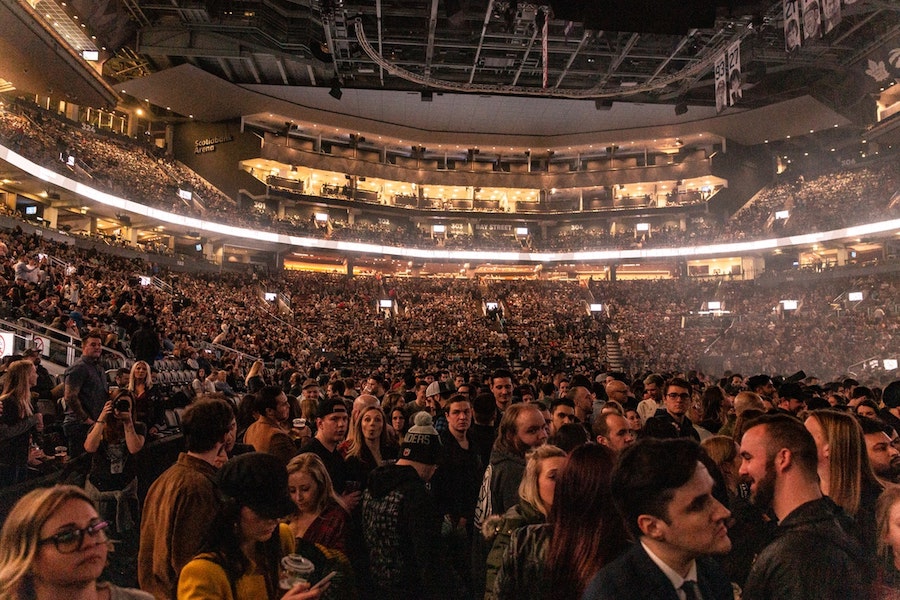
Queues at the entrance have a direct impact on the attendee experience. They cause delays, operational problems and, in the worst cases, safety risks. At festivals, conferences, trade fairs and sporting events, poorly planned access control creates unnecessary bottlenecks and gives people a bad first impression of the event.
Today, attendees expect to get in quickly, in an orderly way and safely. That is why a well-designed queue-free access control system has become key to running any event smoothly.

To keep queues short and get people in quickly, you need to work on three things:
When these three pillars are planned properly, access to the event is much smoother and more efficient.
The first step is to know roughly how many people will attend. You can estimate this from:
An online accreditation system makes organisation much easier and helps you anticipate what the entrance will need on the day.
With this information you can plan access control for your event properly and avoid unnecessary congestion.
Not every event fills up in the same way. One of the most important factors is understanding how people will arrive:
At concerts or sporting events, for example, most attendees arrive within a very short window. At trade fairs or festivals, arrivals tend to be spread across the whole day.
Analysing this flow lets you adjust:
Sizing is one of the most important factors in avoiding queues. It means calculating the resources you need based on:
You also need to take into account:
For example, if 15,000 attendees need to get in within an hour and there are only five validation points, queues are inevitable.

At large events, small delays turn into big operational problems.
Things like:
…may look like minor details, but multiplied by thousands of attendees they add up to minutes or even hours of waiting.
That is why more and more events use:
| Problem | Solution |
|---|---|
| Not enough entrances | More lanes and validation points |
| Duplicate tickets | Real-time QR validation |
| Slow entry | Fast PDAs and well-trained staff |
| Crowd bottlenecks | Better operational sizing |
| Access control at trade fairs | Separate entrances for each type of attendee (visitors, exhibitors, press) |
Queues do not only happen at the entrance. People leaving the venue can also cause serious problems, especially at concerts, stadiums and large festivals.
To manage the exit properly, look at:
Good planning improves both safety and the attendee’s lasting impression of the event.

Getting in is one of the most critical moments of any event. A bad experience at this point directly affects how people see the whole organisation.
Planning access control properly helps you:
Events with large audiences now need professional solutions that combine fast validation, real-time control and an efficient operation.

The best way is to combine an accurate attendance forecast, several entrances, fast QR validation and a properly sized operation.
Real-time QR validation, professional PDAs and centralised control make getting your audience in significantly faster.
Usually because of poor planning, too few entrances or a badly distributed flow of attendees.
Avoiding queues at events takes planning, forecasting and the right access control strategy. Well-trained staff, fast validation and the right technology improve both the operation and the attendee experience.
If you want to know more about how a professional validation and access system works, take a look at our page on access control for events.

